
Emergency situations require clear communication because it determines whether emergency responders will work together efficiently or become confused, which leads to expensive problems. Teams in fast-moving situations need to operate without spending time establishing their roles or doubting their received orders. The group BLS training program establishes its essential function at this point. Team training develops shared language between members, which creates a foundation of trust that enables them to respond consistently under high-stress conditions.
Why Communication Breaks Down During Emergencies
High-stress scenarios trigger adrenaline, fear, and split-second decision-making. Employees who lack training face difficulties in effective communication despite their experience. The presence of shouting conflicting instructions together with the hesitate to action and the ability to comprehend different roles leads to slower response times and a higher risk. The structured BLS Training program is essential because it teaches necessary skills through three core elements, which include clarity, repetition, and teamwork development.
How Group BLS Training Builds Shared Understanding
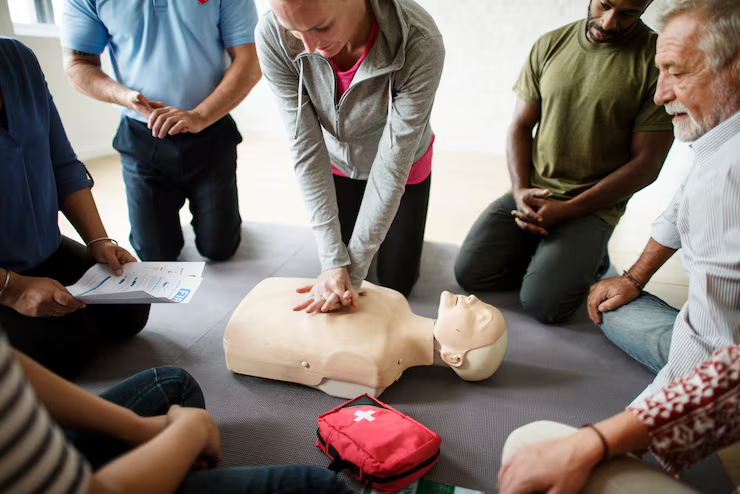
Group BLS training enables teams to learn together while practicing their skills through actual situation training. The shared experience enables all participants to comprehend the correct procedures and the expected behavior of others.
Key communication benefits include:
- Clear role recognition during emergencies
- Familiarity with standard verbal cues and commands
- Reduced hesitation when stepping into action
- Stronger confidence in team-based decision-making
Because everyone trains together, responses become coordinated rather than reactive.
Practicing Under Pressure Improves Real-World Performance
BLS classes conduct emergency drills to create simulated high-stress situations that take place in a controlled setting. The teams demonstrate their public speaking skills by practicing clear communication and active listening while maintaining their composure in various situations. The process of repeating these activities helps develop muscle memory while building self-assurance.
During training sessions, participants learn to:
- Communicate their messages with composure while executing emergency response operations.
- They need to verify their understanding of instructions through fast and precise methods.
- They need to provide assistance to their partners while maintaining a clear and organized work environment.
- They need to sustain their concentration during times when various activities occur simultaneously.
These skills transfer directly to real emergencies, where clarity matters most.
Why BLS Certification Strengthens Team Accountability
The group members who achieve BLS certification together develop a communal duty toward their shared task. The entire group shares an understanding of identical standards while they adhere to unified procedures and use standardized communication methods. The team members achieve better operational clarity because they can now work with enhanced knowledge of each other’s responsibilities and tasks.
Certified teams are more likely to:
- Certified teams demonstrate greater ability to take initiative because they do not fear making incorrect decisions.
- The teams establish mutual trust, which enables them to rely on each other’s emergency actions.
- The teams maintain effective communication with responders and supervisors by providing clear updates about their work progress.
Certification reinforces confidence not just in skills, but in teamwork.
Long-Term Benefits of Training Together
The team demonstrates improved communication abilities when members participate in joint training sessions. Group-based training activities establish trust among team members, which results in better workplace collaboration and creates an ongoing readiness culture that extends beyond mandatory compliance standards.
When emergencies occur, teams that have received training together maintain their composure while they execute their mission through coordinated efforts and a clear understanding of their objectives.
Conclusion: Build Stronger Emergency Communication as a Team
Emergency response systems require more than individual abilities because they depend on core elements, which include teamwork, trust, and effective communication skills needed for high-pressure situations. Group-based training ensures everyone is prepared to act together when it matters most. Your workplace needs confident responders who work together as an effective team. Partner with Heart Starters Inc. and invest in BLS training that focuses on communication skills development.