
When it comes to workplace safety training, an online CPR first aid certification course may raise doubts among some as to whether CPR and First Aid are the same thing. Though closely related, they differ in the type of emergency response they prepare people to handle. Knowing the difference will guide employers, supervisors, and team members in deciding which one of them to pursue.
Understanding CPR Certification
CPR, Cardiopulmonary Resuscitation, sought life-saving skill used when the heart or breathing stops. CPR programs teach long-term people about what to do immediately during a critical emergency, and help them keep the flow of oxygen until professional help is available.
CPR training usually involves teaching students how to:
- Give adequate chest compressions
- Administer rescue breaths when proper
- Respond to choked emergencies
- Use an Automated External Defibrillator
- Identify signs of cardiac arrest
Since cardiac emergencies can occur unanticipatedly, CPR training plays a vital role in the development of workplace readiness.
What Does First Aid Certification Cover?
First Aid training covers a much wider range of emergencies. Instead of focusing only on cardiac or breathing emergencies, it prepares participants to respond to many situations that may occur at work, in public settings, or during daily activities.
Common topics covered in First Aid training include:
- Bleeding control
- Burns and scalds
- Fractures and sprains
- Medical emergencies
- Environmental emergencies
- Shock management
- Scene assessment and safety
A comprehensive CPR and first aid certification training program combines both skill sets, helping participants feel prepared for various emergency situations.
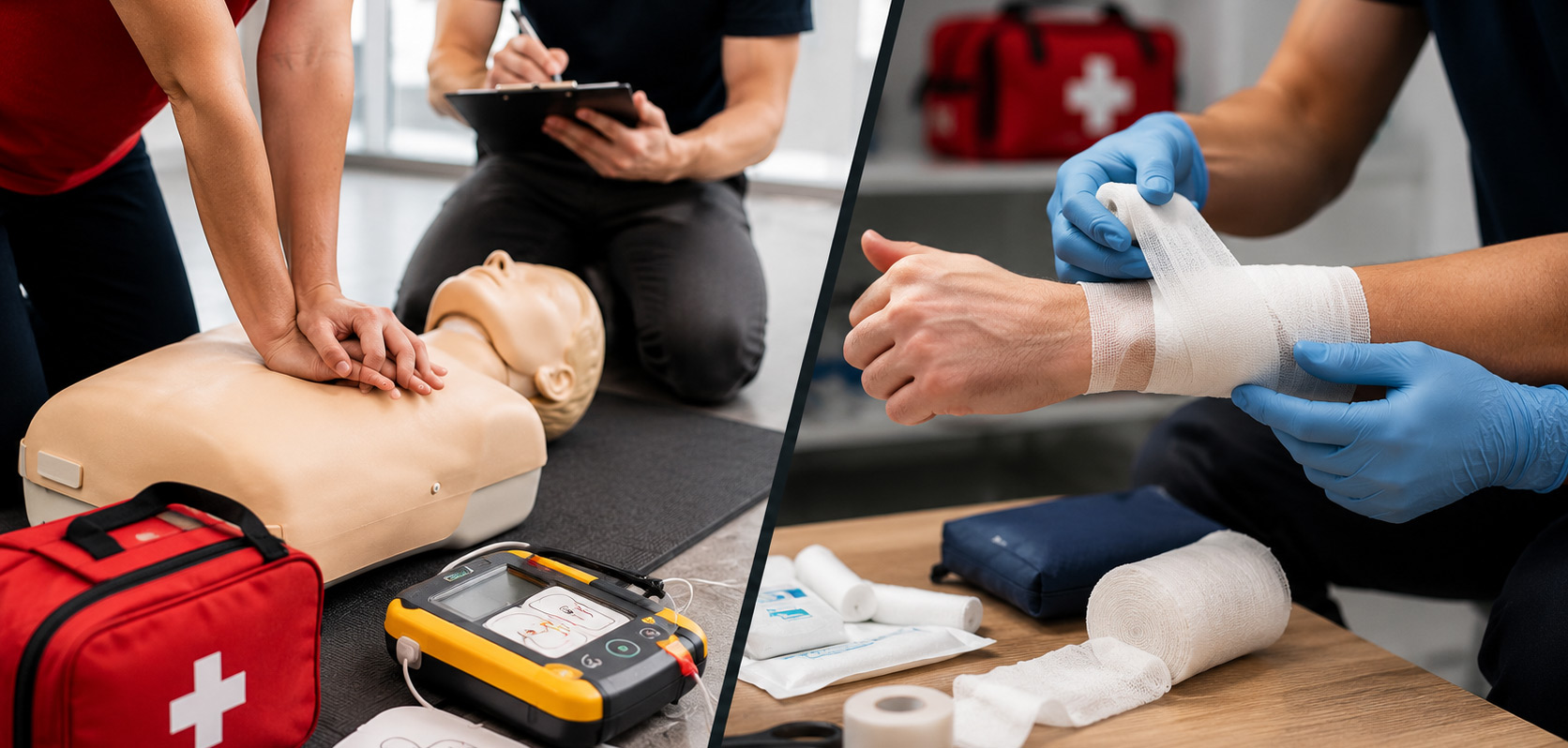
Why Are CPR and First Aid Often Combined?
Many workplaces require employees to have both CPR and First Aid knowledge. Emergencies rarely follow a predictable pattern, and a responder may need multiple skills before emergency services arrive.
For example, a person who experiences a fall could suffer injuries that require First Aid care. In another situation, a cardiac emergency may require immediate CPR and AED use.
Benefits of combined training include:
- Greater workplace readiness
- Faster emergency response
- Improved confidence during incidents
- Compliance with workplace safety requirements
- Better protection for staff and visitors
This is why many organizations choose a CPR first aid certification training program rather than taking separate courses.
Which Certification Is Right for Your Workplace?
The answer depends on the type of work being performed and the level of risk present in the environment. Offices, retail locations, construction sites, educational facilities, and community organizations may all have different training requirements.
Before selecting a course, consider:
- Workplace hazards
- Regulatory requirements
- Team size
- Emergency response expectations
- Existing safety programs
A well-planned training program ensures that employees have the skills needed to respond effectively when emergencies occur.
How Training Helps Build a Safer Environment
Accidents can happen at any time. Having trained staff available can make a huge difference in the first few minutes of an emergency.
A high-quality CPR first aid certification course will provide participants with practical skills by teaching in real-life scenarios. These practical approaches improve learning and confidence when responding to emergencies.
Likewise, ongoing CPR and first aid certification training will keep skills and knowledge up to date and reinforce good response techniques that may be needed at any time.
This creates a better emergency preparedness program for organizations that invest in safety training and a broader culture of responsibility in the workplace.
Choosing the Right Training for Emergency Preparedness
Understanding the difference between CPR and First Aid certification is an essential first step in creating a safer workplace. CPR is the certification for the treatment of life-threatening cardiac and breathing emergencies. First Aid training may provide knowledge about the wider array of potential injuries and medical issues.
If your organization is looking for a CPR first aid certification training program or needs to decide which training program for workplace safety training, professional training taught by skilled teachers can give them confidence and skills to respond correctly. For advanced training, workplace programs, and safety education, Heart Starters Inc. offers CPR and first aid courses to suit our clients’ needs across a wide range of workplaces.