
More people tend to forget about the complications of CPR during cardiac emergencies because they focus on emergency medical services, which need to reach the patient. The main goal is to keep blood and oxygen moving through the body until emergency medical services arrive. The body may sustain physical injuries from CPR, which include bruises and rib fractures, but immediate treatment establishes a chance for survival. Understanding these risks helps workplaces, caregivers, and community members feel more prepared and confident during emergencies.
Why CPR Can Cause Physical Injuries
The practice of CPR needs strong chest compressions, which enable blood flow when a person’s heart stops functioning. The need for continuous deep compressions during the procedure leads to the possibility of pressure-related injuries throughout the entire process. The risk of these injuries increases in older adults and people with fragile bones, but they can occur in anyone who needs chest compressions.
The most common injuries may include:
- Rib fractures
- Chest soreness
- Bruising around the chest area
- Muscle strain
- Minor damage to soft tissue
Medical professionals consider CPR to be much safer than no treatment during cardiac arrest, even though the injuries appear serious.
Understanding the Side Effects of CPR
The public expresses concerns about the side effects of CPR because they believe they have heard accounts of cracked ribs and visible bruising that occur after resuscitation. The medical community considers both outcomes as manageable medical conditions that exist but present greater risks than untreated cardiac arrest.
Chest compressions must reach the proper depth to be effective. If compressions become too weak, then blood flow will stop reaching both the brain and essential body parts. Certified training programs emphasize proper hand placement techniques together with compression depth assessment because this serves as the main focus of their training.
The following temporary effects will occur after a person successfully undergoes resuscitation:
- Tenderness in the chest
- Swelling near compression areas
- Breathing discomfort
- Fatigue during recovery
Medical staff members monitor patients after CPR to provide treatment for their injuries and assist their healing process.
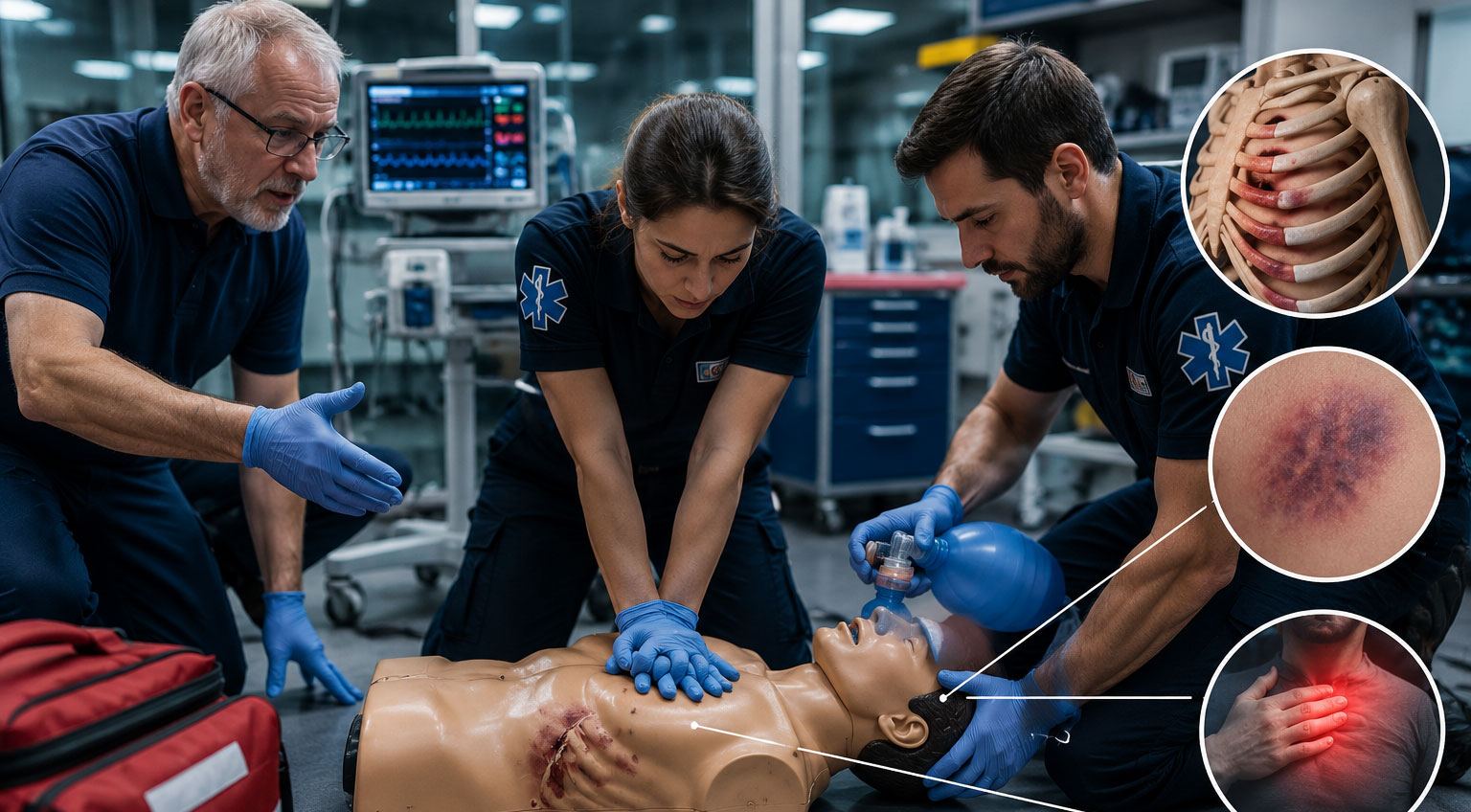
Rib Fractures During CPR – Why They Happen
There are several CPR complications, but rib fractures rank among the most recognized risks. Chest compressions create continuous pressure, which causes the rib cage to move repeatedly. The bones of elderly patients tend to crack or fracture under specific circumstances.
Medical professionals consider rib fractures to be serious injuries, but they use this evidence to demonstrate that chest compressions maintained sufficient power for blood circulation. Emergency responders have been trained to maintain CPR procedures during suspected fractures because stopping chest compressions during cardiac arrest decreases chances of survival.
Important things to remember about rib fractures:
- They are a known risk during lifesaving CPR
- Older adults may face a higher risk
- Proper training reduces unnecessary injury
- Survival remains the top priority during emergencies
Learning correct technique through certified instruction can help improve confidence and reduce hesitation during real emergencies.
How Proper Training Reduces CPR Risks
Quality CPR training teaches more than just chest compressions. Participants learn how to respond calmly, assess emergencies, and perform CPR safely and effectively. Hands-on practice is especially important because it helps build muscle memory and proper positioning.
A strong training course typically covers:
- Correct compression depth and speed
- AED awareness and usage
- Safe response procedures
- Rescue breathing techniques
- Team coordination during emergencies
These practical lessons help reduce panic and improve response quality in workplaces, schools, sports facilities, and public spaces.
Why Fear Should Never Stop Someone From Helping
Concerns about complications of CPR sometimes make people afraid to step in during emergencies. However, cardiac arrest can become fatal within minutes if no action is taken. Immediate CPR can significantly improve survival chances before paramedics arrive.
It is important to remember that most injuries connected to CPR can be treated later. Brain damage or loss of life caused by delayed action may not be reversible. Acting quickly often gives the person the best possible chance of recovery.
The Importance of Workplace CPR Readiness
The existence of CPR and first aid training programs brings their maximum value to workplace environments. Unforeseen emergencies can occur at any time in offices, warehouse facilities, retail locations, construction sites, and community areas. Staff members achieve confident emergency responses through proper training, which eliminates their doubts regarding CPR treatment results and other emergency situations.
The prepared workplace environment provides organizations with the main advantages, which include:
- Faster emergency response
- Better employee confidence
- Improved safety awareness
- Support for compliance requirements
- Increased readiness during medical emergencies
Organizations that invest in CPR education create safer environments that protect both their employees and their visitors.
Building Confidence Through CPR Education
People experience a better understanding of emergency situations when they comprehend the challenges of conducting CPR. The practice of CPR exists as a vital lifesaving technique that medical professionals use during cardiac arrest emergencies, despite the possibility of someone developing bruises or rib fractures. The correct training teaches people to respond with safe and effective behavior during situations that require immediate action. Heart Starters Inc. provides professional CPR and first aid training programs to workplaces and communities that want to enhance their emergency response capabilities through training that develops operational confidence and readiness skills.