
Most people, when registering for Basic Life Support (BLS) Training, usually think that it is really the same as CPR. However, each training course of each is different in terms of focusing on helping a person during an emergency. First of all, it is very important to know the difference before deciding on the certification that will really suit your office, the role in healthcare, or just being safe and prepared.
Specific certifications are often required by employers, healthcare facilities, and community organizations. Choosing the right class can be a great investment to be well prepared in case of an emergency situation.
Understanding CPR Training
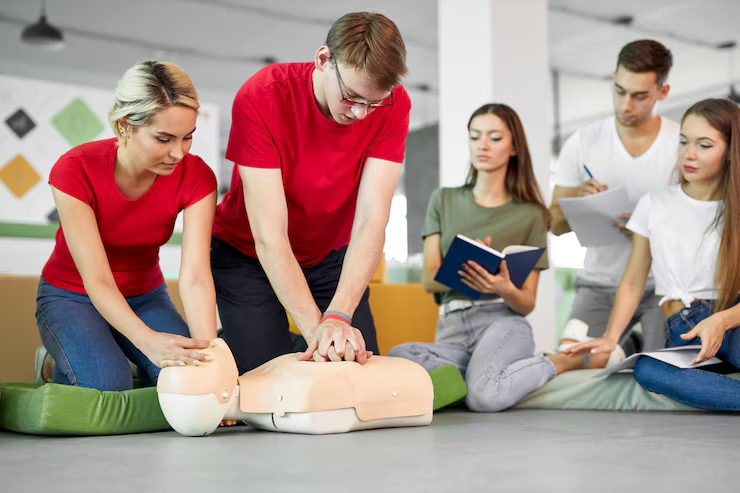
CPR, or Cardiopulmonary Resuscitation, is a method of teaching the necessary skills for breathing and heartbeat resuscitation when it suddenly stops in a person. The learners are taught chest compressions, mouth-to-mouth rescue breaths, and are given the confidence to help until professional emergency medical services show up.
CPR training is versatile and can be adapted to various types of workplaces and community environments. The emphasis of these courses is on immediate response and hands-on implementation of life-saving measures, which are extremely helpful during critical situations.
Some common CPR topics include:
- Recognizing cardiac emergencies
- Performing chest compressions correctly
- Responding to choking incidents
- Using an automated external defibrillator
- Managing breathing emergencies
These skills help create safer workplaces and better-prepared teams.
What Makes BLS Different?
Basic Life Support (BLS) Training is also much more than just a basic CPR class. It is mainly targeted at healthcare staff and other responders who are likely to be called upon to deal with more serious medical emergencies.
In BLS, more attention is paid to advanced resuscitation skills and working in a well-coordinated emergency response style. Participants get trained on the best ways of collaborating in a team while performing lifesaving interventions.
Key areas often covered include:
- Team-based emergency response
- Advanced airway considerations
- High-quality chest compressions
- Multi-rescuer resuscitation techniques
- Rapid patient assessment
Because of these additional components, BLS certification is often required in healthcare-related environments.
Comparing Course Requirements
While exploring credentials, a lot of folks look up the differences between CPR level C vs BLS since both of these training programs offer lifesaving techniques. Yet, the target group and training details may considerably vary.
CPR Level C is the usual pick for offices, kids’ centers, gyms, and other areas that need first aid training. Whereas BLS generally covers everything that goes along with it and is aimed at the medical staff who are likely to handle emergencies on a regular basis.
Knowing what is expected before signing up for a course might be just what you need to be sure that you conform to the rules at your job or the law.
The Role of Defibrillator Training
Learning to operate an AED should be an essential part of any emergency response training. A defibrillator is a lifesaving device that can be used to deliver a shock to the heart in order to restore a normal rhythm in case of a sudden cardiac arrest.
A lot of first aid and CPR programs integrate AED Level C Training into their curriculum. Attendees get practical experience with mock devices and are instructed about the circumstances under which defibrillation is indicated.
Being well-versed in the use of an AED might enhance one’s preparedness for emergencies and decrease the likelihood of hesitation in a panic situation.
Which Course Should You Choose?
The answer to that question is largely dependent on what your job entails and the demands of your workplace.
The following points outline when CPR training might be most useful for you:
- Having a basic emergency response certificate is a requirement at your workplace
- You are managing staff members or visitors
- Your job is in recreation, education, or customer service environments
Here are some examples of when BLS training could be most appropriate:
- Your job is at healthcare facilities
- Your company wants you to learn advanced resuscitation skills
- It is part of your duties to handle team-based emergency response efforts
Before registering, always verify which certification level is required for your role.
Why Understanding the Difference Matters
Many employers and course participants often ask about the differences between CPR level C vs BLS because choosing the incorrect course may only result in undertaking the training again unnecessarily. Knowing the intent of each type of certification is key to making sure that the participants are trained with the most appropriate skills for their work.
Similarly, learning the AED Level C Training program can enhance one’s ability to tackle emergencies and help make a quicker response to be made when it is a matter of time.
Choosing the Right Emergency Response Training
Whether it’s a basic guideline from the workplace or a more thorough healthcare-oriented lecture, it is vital to grasp the divergence between CPR and BLS first. Choosing the appropriate class will help you develop the right skills for your job tasks as well as for emergencies.
For the best professional education, safety at work, and the latest information about certification, you may get in touch with Heart Starters Inc. They will let you know the course that will suit you the best.